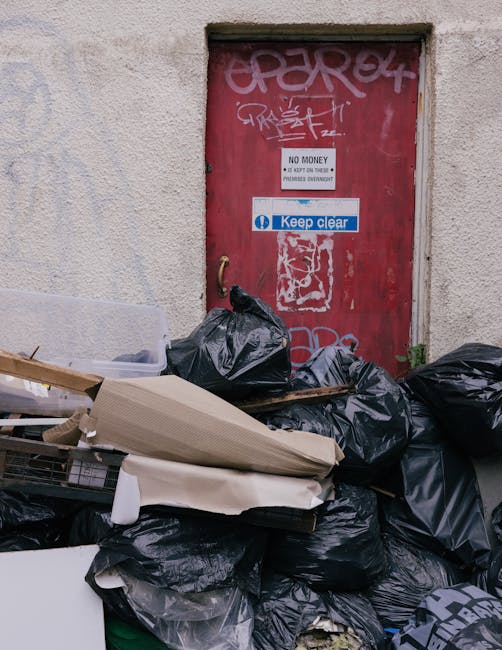
Compare quotes: St John's Wood rubbish removal prices
If you are trying to compare quotes for St John's Wood rubbish removal prices, you are probably dealing with one of two things: a pile that has grown a bit too quickly, or a deadline that arrived before the clear-out did. Either way, the process should be simpler than most people expect. The trick is not just finding the cheapest number on paper. It is understanding what that price actually includes, what may be added later, and whether the service is genuinely suited to your job.
In St John's Wood, that matters even more. Access can be tight, parking can be awkward, and the difference between a quick collection and a messy one is often in the detail. This guide walks you through how quotes are built, what affects the final cost, how to compare like for like, and how to avoid the classic mistakes that turn a "good deal" into an expensive headache.
If you want a broader view of how pricing is structured across services, it can also help to review the company's pricing and quotes information alongside the service pages for specific jobs such as general waste removal or house clearance.
Table of Contents
- Why comparing rubbish removal quotes matters
- How rubbish removal quotes are usually priced
- Key benefits of comparing quotes properly
- Who this is for and when it makes sense
- Step-by-step guidance for comparing prices
- Expert tips for better results
- Common mistakes to avoid
- Tools, resources and recommendations
- Law, compliance, standards and best practice
- Options and comparison table
- Case study or real-world example
- Practical checklist
- Conclusion
- Frequently asked questions
Why Compare quotes: St John's Wood rubbish removal prices Matters
Comparing quotes is not just about saving money, although that is obviously part of it. It is about avoiding mismatched expectations. One company may quote for loading only, while another includes labour, disposal, transport, and heavier items. On the surface, the first quote might look better. In reality, it may end up costing more once extras are added. Funny how often that happens, isn't it?
For St John's Wood properties, where homes and flats can vary from compact apartments to larger family spaces, the amount of waste can also be harder to judge from a quick glance. A loft full of mixed household items, a garage with old furniture, or a small office clear-out all behave differently from a pricing point of view. The quote should reflect that reality.
There is also a trust angle. A clear quote often tells you a lot about the company itself. Are they specific? Do they explain weight limits, access assumptions, and what happens to reusable items? Do they mention recycling or responsible disposal? A professional service should be able to answer those points without fuss. If they cannot, that is a sign to pause.
Expert summary: the best rubbish removal quote is not the lowest one in isolation; it is the clearest one for the actual job you need done.
How Compare quotes: St John's Wood rubbish removal prices Works
Most rubbish removal pricing starts with three basic questions: how much waste is there, what kind of waste is it, and how easy is it to remove? Those three factors usually shape the quote more than anything else.
Some firms price by volume, often using part-load or full-load style estimates. Others may price by item, by labour time, or by the type of clearance. For example, a light furniture collection is usually simpler than builders' rubble, and a straightforward flat clearance is different again from a garden clearance with soil, branches, and mixed bagged waste. The method matters because the pricing model affects what you can fairly compare.
You should also expect the quote to reflect practical details such as:
- number of loaders needed
- floor level and stair access
- parking distance from the property
- whether items are bulky or unusually heavy
- the mix of recyclable, reusable, and general waste
- whether the job is urgent or booked in advance
In other words, the quote is not just about waste. It is about the work around the waste. That is the bit people sometimes miss.
If your job is more specialised, it can help to look at the relevant service page before requesting prices. For instance, builders' rubble and renovation debris often fit better with builders waste clearance, while household furniture may be more suited to furniture clearance or furniture disposal.
Key Benefits and Practical Advantages
When you compare quotes properly, the benefits go well beyond "best price wins".
- Better value for the actual job: You can see which provider includes the right level of labour and disposal.
- Fewer surprises: Clear comparison helps you spot call-out charges, minimum fees, and loading restrictions before booking.
- Faster decision-making: Once the quotes are in a similar format, choosing becomes much easier.
- Stronger service fit: A quote can reveal whether the provider is better for a flat clearance, office clearance, or mixed household waste.
- More confidence: A well-structured quote usually signals a well-run operation. Not always, but usually.
There is also a practical advantage in comparing not just the number, but the process. A company that asks sensible questions tends to produce a more accurate quote. That can save a second visit, a renegotiation on the day, or the awkward moment where everyone stands in the hallway trying to work out what counts as "extra".
If you are clearing a smaller property, the right fit might be flat clearance. For larger homes or inherited properties, home clearance or house clearance may be more appropriate.
Who This Is For and When It Makes Sense
This approach makes sense for just about anyone who wants rubbish removed without paying more than they need to. That said, a few groups benefit especially:
- Homeowners and tenants dealing with end-of-tenancy clear-outs, moving day, or general clutter.
- Landlords and letting agents who need reliable, predictable turnaround.
- Businesses clearing stock, old desks, archived items, or unwanted office furniture.
- Trades and renovators who need mixed construction waste taken away after a project.
- Families handling an estate clearance where the contents are difficult to estimate in advance.
It also makes sense when you are not in a rush, which sounds odd but is true. If you can get two or three quotes and compare properly, you are more likely to choose a service that suits your waste type, access, and timing. If you leave it until the last minute, you tend to accept whatever number arrives first. We have all done that at some point.
Business users may also want to look at business waste removal or office clearance where the requirements are often more structured than a standard household job.
Step-by-Step Guidance
1. Define exactly what needs removing
Start by listing what is going. Separate furniture, bagged rubbish, electrical items, garden waste, builders waste, and anything potentially sensitive or fragile. The clearer your list, the better the quote.
2. Estimate volume realistically
Do not guess wildly. If the pile reaches knee height across one wall, say that. If a room is half full, say that too. A decent provider can work from photos, but only if the pictures show scale, not just a dramatic close-up of one dusty chair.
3. Ask what is included
Check whether the quote includes labour, VAT if applicable, disposal fees, congestion or parking assumptions, and any extra handling for bulky items. This is where apples-to-apples comparison really begins.
4. Confirm access details
Tell the provider about stairs, lifts, narrow hallways, basements, or a long walk from parking. In St John's Wood, access can be the difference between a neat job and a slightly grumpy one.
5. Compare more than the headline price
Read the quote carefully. A slightly higher quote may be better value if it includes more labour or fewer restrictions. A cheaper quote can still be good, of course, but only if the scope is clear.
6. Check the disposal approach
Ask what happens to reusable and recyclable material. A responsible provider should be willing to explain sorting and disposal in plain English. If you care about sustainability, this is not a side issue.
7. Get the final price confirmed before collection
On the day, confirm whether the job still matches the original description. If the pile has changed a lot, a revised price may be fair. If it has not changed, there should be no awkward add-ons. Simple as that.
Expert Tips for Better Results
A few small habits can make a big difference when you are comparing prices.
- Use photographs from multiple angles. One angle can hide a lot. Two or three gives a more honest picture.
- Be honest about heavy items. Pianos, large wardrobes, and awkward appliances can change the labour involved.
- Ask for exclusions in writing. It is much easier to compare quotes when you know what is not included.
- Check whether the company handles sorting. That can matter for recycling, especially with mixed loads.
- Look for clear communication. The way a company answers questions often tells you more than the quote itself.
One practical tip people overlook: ask whether the job can be split into sections. For example, a loft clear-out might be easier to price separately from old garden waste. That can sometimes sharpen the quote and reduce waste of time. And no one enjoys standing in a hallway discussing bags of old tiles at 8:00 a.m. on a wet Tuesday.
If you are dealing with awkward storage spaces, you may also find loft clearance, garage clearance, or garden clearance useful as reference points when describing the job.
Common Mistakes to Avoid
Most pricing problems come from poor comparison, not from the service itself. A few common mistakes show up again and again.
- Choosing the cheapest quote without checking the scope. Cheap and clear is great. Cheap and vague is risky.
- Forgetting access issues. A quote based on easy access can change fast if the team has to carry items a long way.
- Mixing different waste types in one estimate. Garden waste, furniture, and builders waste may not be priced the same way.
- Ignoring disposal standards. A low quote is less appealing if it comes with poor handling or unclear disposal practices.
- Not asking about minimum charges. Small jobs can sometimes look expensive because of a minimum collection fee.
Another one: people sometimes compare a photo-based estimate with a site-visit quote and think the difference means one company is overcharging. Not necessarily. The site visit may simply be more accurate. Annoying? Maybe. Fair? Usually, yes.
Tools, Resources and Recommendations
You do not need fancy software to compare rubbish removal prices well. A simple, organised approach works best.
- Take clear photos of the waste from a few distances.
- Write a short inventory of what needs removing.
- Note access points such as lifts, stairs, rear entrances, or parking constraints.
- Keep one comparison sheet with quote date, price, inclusions, exclusions, and estimated timing.
- Save all messages so you have a written record if anything needs checking later.
For people who like having a broader picture before they book, the company's pages on recycling and sustainability, payment and security, and insurance and safety are sensible places to review. They do not tell you the price outright, but they do help you judge whether the provider operates in a careful, transparent way.
Law, Compliance, Standards, or Best Practice
With rubbish removal, it is wise to think about compliance and responsible handling, even if your job is small. In the UK, waste should be collected, transported, and disposed of properly. That means using a provider that can explain what happens to the waste and how mixed materials are handled.
For householders, the key practical point is simple: do not hand waste to someone who cannot explain where it goes. For businesses, the stakes can be higher because record-keeping, duty of care, and responsible disposal usually matter more. If you are clearing an office, for example, it helps to work with a provider that understands separation of furniture, electronics, paper, and general waste.
Best practice also includes safe lifting, proper loading, and sensible on-site conduct. That may sound basic, but basic is exactly what you want when a heavy wardrobe is coming down a narrow staircase. You want calm, not improvisation.
When comparing quotes, ask yourself whether the service feels compliant in spirit as well as in wording. Is it clear? Is it cautious where needed? Does it avoid vague promises? Those are good signs.
Options, Methods, or Comparison Table
There is more than one way to book rubbish removal, and each has its place. Here is a simple comparison to help you choose.
| Method | Best for | Strengths | Watch-outs |
|---|---|---|---|
| Photo-based quote | Standard household or mixed waste jobs | Fast, convenient, easy to request from home | Can be less accurate if the photos do not show scale |
| Phone quote | Quick decisions and straightforward jobs | Useful for simple collections, easy to arrange | Details can be missed if the description is rushed |
| Site visit or in-person estimate | Large, complex, or access-sensitive clearances | Often more accurate for bulky or mixed loads | May take more time to arrange |
| Fixed-price package | Common clearance types with clear scope | Good clarity and easier budgeting | May be less flexible if the job changes |
In many real-world cases, a photo-based quote is enough. For bigger properties, though, an in-person estimate can be worth the extra time. If the job is a full property clear-out or includes several room types, it is usually safer to be thorough rather than fast.
Case Study or Real-World Example
Picture a typical St John's Wood flat clear-out. The client has a broken sofa, two wardrobes, several bags of household clutter, and an old desk tucked into a corner. Nothing dramatic. But the flat is up a narrow staircase, parking is limited, and the sofa does not exactly want to leave quietly.
One quote is low, but it is based on curbside access and no dismantling. Another is slightly higher, but it includes two loaders, stair carry, dismantling if needed, and disposal. The second quote looks more expensive at first glance. In practice, it is probably the safer and more accurate option.
The client chooses the clearer quote, collection is completed in one visit, and the final price matches the agreed scope. Nothing glamorous, just a good outcome. Truth be told, that is what most people want: no drama, no surprise invoice, and a hallway that feels normal again by lunchtime.
That kind of job also shows why matching the right service matters. A compact flat may call for flat clearance, while mixed domestic items might be better handled through a broader home clearance approach.
Practical Checklist
Use this before you accept any quote.
- Have I described everything that needs removing?
- Have I included photos from more than one angle?
- Does the quote specify what is included?
- Have I checked for minimum charges or extra fees?
- Did I mention stairs, lift access, or parking restrictions?
- Do I know whether the job includes labour and disposal?
- Have I asked how recyclable items are handled?
- Is the quote suitable for the type of waste I have?
- Is the time window realistic for the size of the job?
- Do I feel confident the provider has understood the brief?
If you can tick most of those off, you are in a much better position than simply chasing the lowest headline number. That one list saves a lot of back-and-forth.
Conclusion
Comparing St John's Wood rubbish removal prices is really about making a clean, informed decision. Once you understand how quotes are built, what affects the final figure, and which details matter most, the whole process becomes much less stressful. You are not just buying a price. You are choosing certainty, convenience, and a service that fits the job properly.
Take the time to describe the waste clearly, ask sensible questions, and compare the same things across each quote. Do that, and you are far more likely to get a fair outcome with no last-minute surprises. That is the goal, honestly.
If you are ready to move forward, review the service details, check the pricing guidance, and speak with a provider who can give you a clear, practical quote based on your actual needs. Small bit of effort now, much easier day later.
Get a free quote today and see how much you can save.
Frequently Asked Questions
How do I compare rubbish removal quotes fairly?
Compare the same factors in each quote: waste type, volume, labour, access, disposal, and any extra fees. A fair comparison looks at total value, not just the headline price.
Why do rubbish removal prices vary so much in St John's Wood?
Prices vary because properties, access, parking, waste type, and job size vary. A straightforward collection is usually cheaper than a bulky, mixed, or access-heavy clearance.
What details should I give when asking for a quote?
Give a clear list of items, photos from more than one angle, access details, floor level, and any special concerns such as heavy items or urgent timing.
Is the cheapest quote always the best option?
No. The cheapest quote may exclude labour, disposal, or access work. A slightly higher quote can be better value if it is more complete and easier to rely on.
Can I get a rubbish removal quote from photos?
Yes, many providers can quote from photos, especially for standard jobs. Make sure the photos show scale and do not hide the full amount of waste.
What affects the final price on the day?
The final price may change if the amount of waste is different from what was described, if access is harder than expected, or if heavy items need extra handling.
Should I compare rubbish removal and clearance services separately?
Yes, if the jobs are different. Furniture, garden waste, office items, and builders' rubble can all be priced differently, so it helps to compare the right service type.
How far in advance should I request quotes?
As early as you can. That gives you time to compare properly, ask follow-up questions, and avoid accepting the first rushed quote that lands in your inbox.
What should a good rubbish removal quote include?
A good quote should explain what is included, what is excluded, how disposal is handled, and whether labour or access issues are covered.
Do I need a different quote for business waste removal?
Usually yes. Business waste often needs more structured handling than household rubbish, so it is sensible to use a service that understands office and commercial clearances.
Is recycling important when comparing quotes?
It can be. A provider that explains sorting and recycling practices is usually showing a more careful approach to disposal, which many customers value.
What is the safest way to avoid hidden charges?
Ask for written confirmation of inclusions, check for minimum charges, mention access limitations, and make sure the provider has understood the full scope before collection.