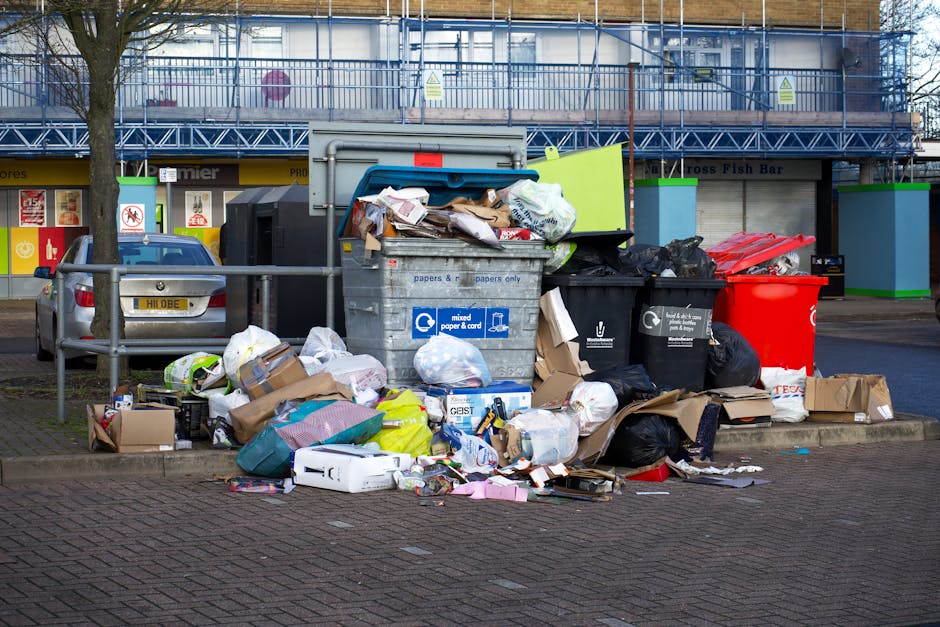
Real cost of rubbish removal in NW8 explained
If you have ever looked at a skip, a man-and-van quote, and a "from" price online and thought, what is the real number here?, you are not alone. The real cost of rubbish removal in NW8 explained properly is not just about how much waste you have. It is about access, labour, load type, timing, disposal fees, and whether you need a quick one-off clear-out or a more involved job. In a place like NW8, where streets can be busy, parking can be tight, and many properties have stairs, basements, or awkward access, the final price can shift quite a bit. This guide breaks it down in plain English so you can budget sensibly, avoid surprises, and choose the right service with confidence.
In our experience, most people do not want a lecture on waste management. They want a clear answer, a realistic expectation, and a few practical pointers that stop them paying too much. Fair enough.
Why the real cost of rubbish removal in NW8 explained matters
Getting the price wrong is annoying, but it can also affect the whole job. A quote that looks cheap at first may end up being poor value if it excludes labour, congestion, difficult access, or disposal charges. On the other hand, overestimating the job can lead you to pay for capacity you do not need. That is especially relevant in NW8, where property types vary a lot. A compact flat near St John's Wood might only need a few bulky items cleared, while a larger house clearance could involve multiple rooms, loft contents, and garden waste all at once.
There is also a practical side to this. If you are clearing a property before letting, selling, renovating, or simply reclaiming space, delay costs money too. A room full of old furniture or builders' rubble is not just ugly. It gets in the way, makes the place harder to use, and can create a real stress point. And let's face it, nobody enjoys stepping over a broken wardrobe every morning.
Understanding the real cost helps you compare options properly. It also helps you ask better questions when getting a quote. Instead of "How much is rubbish removal?", you can ask "What is included, how is volume measured, and are there any access or disposal extras?" That small shift usually leads to a much clearer answer.
If you are exploring broader clearance options, it can help to compare the service against related needs such as house clearance, flat clearance, or furniture disposal. Different jobs are priced differently for good reason.
How the real cost of rubbish removal in NW8 explained works
Most rubbish removal pricing is built around a few core variables. The first is volume. Waste is commonly priced by how much space it takes in the vehicle, not just by the number of items. A mattress and a chair may sound light, but they still take space. Heavy waste, such as soil, rubble, or dense builders' material, can be priced differently because weight matters too.
The second factor is labour. If the team has to carry items down several flights of stairs, around tight corners, or through a building with limited parking access, the job takes longer. That extra time shows up in the cost. In NW8, that is not unusual. Some properties have narrow entrances, limited lift access, or resident parking restrictions that add a bit of friction. Nothing dramatic, just the kind of detail that matters to the final figure.
The third factor is disposal. Waste does not disappear into thin air. It must be transported, sorted, and disposed of or recycled responsibly. Different waste streams have different handling requirements. A mixed household load is not the same as green waste, office clutter, or renovation debris. If a quote includes proper disposal and recycling, it may look higher than a bare-bones option, but that is often the more honest price.
Timing also matters. Same-day or next-day clearances can cost more than a flexible booking because the provider has to fit you in quickly. Weekend work, early starts, or jobs in busy parking zones can nudge the price too. It is all fairly ordinary, but these little bits add up.
For example, a small lounge clearance with easy access might be straightforward. Add a heavy sofa, a broken bed base, and a fourth-floor walk-up, and you are suddenly in a different pricing bracket. Same postcode, very different job.
Key benefits and practical advantages
Knowing the real cost upfront gives you more control. That sounds obvious, but people often miss how much smoother the process becomes once the pricing is clear. You can decide whether to clear everything in one visit, split the job into stages, or combine rubbish removal with a bigger clearance service.
- Better budgeting: You can plan the spend instead of guessing and hoping.
- Fewer surprises: Clear pricing reduces awkward add-ons on the day.
- Less waste: A correctly sized job avoids paying for unused capacity.
- Faster turnaround: When you know what is needed, the collection is easier to organise.
- Improved comparison: Like-for-like quotes are much easier to judge.
- Peace of mind: You know the waste is being handled properly, not just shifted out of sight.
There is also a nice side benefit: clearer decisions. Once you see the real cost, it becomes easier to choose between rubbish removal, waste removal, or a more specific service like furniture clearance or builders' waste clearance. Sometimes the cheapest route is not a generic service at all, but a narrower one that matches the load properly.
Expert summary: The real cost is usually driven more by access, waste type, and disposal handling than by postcode alone. In NW8, that matters because properties and parking conditions can vary a lot within a short distance.
Who this is for and when it makes sense
This topic matters to a lot of people, not just homeowners with a garage full of "I'll deal with it later" boxes. To be fair, that garage never clears itself.
You may need rubbish removal in NW8 if you are:
- moving out or preparing a property for sale
- clearing a rented flat at the end of a tenancy
- renovating a kitchen, bathroom, or entire room
- dealing with old furniture, broken appliances, or mixed household clutter
- getting rid of garden waste after a tidy-up
- removing office items from a business premises
- emptying a loft, garage, or storage area
It also makes sense if you simply want the job done quickly without hiring a skip, arranging permits, or lifting heavy items yourself. That said, if you have a lot of space, easy loading access, and time to sort waste carefully, another method may work out better value. So the "right" option depends on the job, not just the postcode.
If the waste is mainly old sofas, wardrobes, or beds, a dedicated furniture service can be more cost-effective. If it is a full property clear-out, something closer to home clearance or loft clearance may give a more realistic overall price.
Step-by-step guidance
If you want a quote that actually reflects the real job, follow this process. It keeps things tidy and avoids the "oh, there was a bit more than we thought" moment that nobody likes.
- List what needs removing. Note items, quantities, and whether anything is unusually heavy or awkward.
- Separate waste types. Mixed household waste, furniture, garden waste, and builders' debris may be handled differently.
- Check access conditions. Stairs, lift access, narrow hallways, parking, and loading distance all matter.
- Decide how fast you need it. Same-day clearance is convenient, but flexibility can lower cost.
- Ask what the quote includes. Labour, loading, disposal, recycling, and any minimum charges should be clear.
- Compare with the right service type. A specific clearance service can sometimes make more sense than a general rubbish removal booking.
- Book a time that suits the property. Morning slots often work well in busy areas, though the best option depends on access.
A simple photo can help too. Not a glamorous bit of admin, but very useful. A few clear images of the waste pile, stairwell, and access route can make the quote far more accurate. If the team can see the job properly, you are less likely to get a surprise later.
Expert tips for better results
Here is the part that tends to save people money in real life.
- Be honest about volume. Underestimating the pile usually leads to adjustments on site.
- Point out awkward access early. It is better to mention the fourth-floor walk-up now than on arrival.
- Group similar waste together. A more organised job is usually easier and quicker to complete.
- Ask about recycling and sorting. Good providers usually separate recyclable material where practical.
- Book before the room becomes unmanageable. A half-full room is easier and cheaper to clear than a floor-to-ceiling one.
- Think about timing. If you are not in a rush, a flexible slot may help.
One little tip people overlook: clear a path before the team arrives. Even moving a couple of side tables or a stack of bags can shave time off the job. It is not magic, just fewer obstacles. Small thing, big difference.
If you are dealing with a business property, it may be worth reviewing office clearance or business waste removal if the waste is mostly desks, packaging, archived materials, or old equipment. Commercial waste is its own beast, really.
Common mistakes to avoid
Most expensive rubbish removal mistakes are pretty ordinary. The problem is they are easy to make when you are busy.
- Choosing the cheapest quote without checking what is included. Low headline prices can hide extras.
- Forgetting access issues. Parking, stair carries, and distance to the vehicle all affect labour time.
- Mixing the wrong materials together. Builders' rubble, green waste, and household rubbish may need different handling.
- Leaving everything until the last minute. Urgent jobs usually cost more.
- Ignoring recycling or reuse options. Some items may be better handled through specific disposal or clearance services.
- Assuming every "rubbish removal" quote is comparable. They often are not.
Another one: not asking whether the provider is transparent about disposal. You do not need a lecture, but you do need basic clarity. If nobody can explain where the waste goes, that is a little red flag. Not a siren, just enough to ask a few more questions.
Tools, resources and recommendations
You do not need a complicated toolkit to manage a clearance well. A few simple things help a lot.
- Phone camera: take clear photos for an accurate quote.
- Basic inventory list: write down the main items and rough quantities.
- Room-by-room notes: helpful for larger home or house clearances.
- Labels or tape: useful if you are separating items to keep, donate, or remove.
- Access notes: mention gates, lifts, staircases, parking, and loading points.
On the service side, it is useful to understand how specialist pages relate to the job. For example, garage clearance can be a better fit for a packed-out garage than a generic load. Likewise, garden clearance may suit branches, soil, and outdoor debris better than a general removal booking.
If you want to understand the wider approach to responsible waste handling, the site's recycling and sustainability page is a useful complement to this article. It helps frame disposal as more than just removal. And that matters, because good waste handling is as much about what happens after collection as it is about lifting the items in the first place.
Law, compliance, standards, or best practice
With rubbish removal, the main thing is not to treat it as a casual throwaway service. In the UK, waste should be collected and disposed of responsibly, and anyone handling commercial or household waste should operate in line with relevant legal and environmental duties. You do not need to know every detail to make a good choice, but you should expect basic professionalism.
Best practice usually includes:
- clear pricing or a clear method for calculating cost
- safe manual handling and sensible loading procedures
- appropriate recycling or segregation where practical
- care with properties, shared hallways, and common areas
- proper insurance and safety awareness
If you are hiring a provider, it is reasonable to check how they approach safety and insurance. You can also look at pages such as insurance and safety and health and safety policy to understand how a company presents its standards. That is not overkill. It is sensible.
For businesses, documentation and duty of care matter even more. If you are disposing of office items or regular commercial waste, make sure the arrangement suits your obligations and record-keeping needs. A tidy process now saves hassle later. Always has, always will.
Options, methods, or comparison table
There is more than one way to get rid of rubbish in NW8. The best choice depends on the load, the access, and how much effort you want to spend yourself.
| Method | Best for | Typical strengths | Possible drawbacks |
|---|---|---|---|
| Man and van rubbish removal | Mixed loads, bulky items, quick clear-outs | Convenient, labour included, usually fast | Can cost more for urgent jobs or difficult access |
| Skip hire | Longer projects, DIY waste, ongoing fill over time | Good for repeated loading, flexible if you have space | May need parking space or permit planning, loading is on you |
| Specialist clearance service | House, flat, loft, garage, or office clearances | Matched to the type of property and waste | Not always the cheapest if you only have a tiny load |
As a rule of thumb, choose the method that reduces hidden effort. If you would rather not carry items down stairs or manage a heavy pile yourself, a clearance service often makes the better value calculation, even if the headline price looks higher than skip hire. Value is not just pounds. It is time, stress, and the fact you are not wrecking your back on a Tuesday afternoon.
Case study or real-world example
Picture a typical NW8 flat clear-out. You have a worn sofa, two chairs, a small coffee table, several bags of mixed household waste, and a few pieces of old shelving. The building has a lift, but it is small, and there is limited on-street loading time. Nothing outrageous. Just one of those jobs that looks simple until you start moving it.
In that situation, the cost would usually depend on three things: the amount of space the items take in the vehicle, whether the team can park close enough to load efficiently, and whether the items are easy to handle or awkward to manoeuvre. If the waste is ready to go and access is straightforward, the job is likely to be more economical. If the sofa has to be carried down multiple flights, and the lift is out of service, the price can rise because the labour burden changes. Same load, different story.
Now compare that with a loft clearance. A loft often contains mixed items, dusty boxes, old furniture, and forgotten odds and ends. That means more sorting, more care, and usually more time on site. So while both jobs are "rubbish removal" in the broad sense, the real cost is not the same at all.
That is the key takeaway: the cost is shaped by the job in front of you, not just the postcode on the booking form.
Practical checklist
Use this quick checklist before you book.
- Have I listed everything that needs removing?
- Do I know whether the waste is household, furniture, garden, or builders' material?
- Have I noted stairs, lifts, parking, and access restrictions?
- Do I need same-day or flexible timing?
- Have I asked what is included in the price?
- Do I understand whether labour, disposal, and recycling are included?
- Would a more specific service be better than a general rubbish removal booking?
- Is there anything valuable, reusable, or sensitive that should be kept back first?
If you can tick most of those off, you are already ahead of the curve. A few minutes of prep can save a lot of back-and-forth later.
Conclusion
The real cost of rubbish removal in NW8 explained simply comes down to the details: volume, weight, access, labour, timing, and disposal. Once you look at those properly, the price stops feeling mysterious and starts making sense. That is the point, really. You should be able to compare options with confidence, choose the right service for the job, and avoid paying for things you do not need.
For many NW8 properties, the smartest move is to be honest about the load, describe access clearly, and choose the service that fits the waste type rather than the other way around. Whether you need a one-off collection, a furniture-focused removal, or a broader clearance, the real value is in a clean, straightforward job done properly.
Get a free quote today and see how much you can save.
And if all that feels like a lot, that is perfectly normal. Start with the pile in front of you, one bag at a time. It does get easier.
Frequently Asked Questions
What affects the cost of rubbish removal in NW8 most?
The biggest factors are usually volume, access, labour, and waste type. A small load in a ground-floor property is very different from a bulky clear-out in a top-floor flat with tight stairs. Parking and timing can also affect the price.
Is rubbish removal cheaper than hiring a skip?
It depends on the job. A skip can work well if you have space and are happy to load it yourself over time. Rubbish removal may be better value if you want labour included, need speed, or have awkward items to move.
Why do some quotes look much cheaper than others?
Cheaper quotes sometimes leave out disposal fees, labour, recycling handling, or extra charges for access. The headline number can be tempting, but it is worth checking exactly what is included before comparing.
Can I get a rubbish removal quote from photos?
Yes, often you can. Photos help a provider estimate the size of the job and the access conditions. Clear pictures usually mean a more accurate quote and fewer surprises on the day.
Does NW8 location itself make rubbish removal more expensive?
Not automatically, but local conditions can affect cost. Parking restrictions, busy streets, narrow access, and stairs are all common reasons a job takes longer or needs more care.
What is the cheapest way to clear bulky waste in NW8?
If you only have a few items and can handle the lifting yourself, some methods may be cheaper. But for awkward furniture or mixed loads, a targeted clearance service can be better value once labour and time are factored in.
Is furniture included in normal rubbish removal?
Often yes, but it may be priced according to size, weight, and handling difficulty. Large sofas, wardrobes, and beds can change the cost, so it is best to mention them clearly when asking for a quote.
Do I need to sort my waste before collection?
It helps if you can separate items by type, especially if there is furniture, garden waste, or builders' material. Good organisation can make the job faster and improve pricing accuracy.
What should I ask before booking rubbish removal?
Ask what the quote includes, how access affects the price, whether there are minimum charges, and whether disposal and recycling are covered. Those four questions usually reveal most of what you need to know.
Can rubbish removal include loft, garage, or house clearances?
Yes, and in many cases those are better handled as dedicated clearance jobs. If the waste is coming from a full room or multiple parts of the property, services like garage clearance, loft clearance, or house clearance may be more appropriate.
How do I avoid hidden charges?
Be specific about what needs removing, mention access issues early, and ask for a written explanation of what is included. If a quote sounds vague, ask follow-up questions. A clear provider will not mind.
What happens to the waste after collection?
It should be transported for lawful disposal, sorting, and recycling where practical. Responsible handling is part of good service, not an optional extra. If sustainability matters to you, it is worth reading about the provider's recycling approach before booking.
When is it better to use a specialist service instead of general rubbish removal?
If the waste is mainly one type of item, such as office contents, garden debris, or old furniture, a specialist service can sometimes be more efficient and cost-effective. Matching the service to the load is usually the smartest approach.