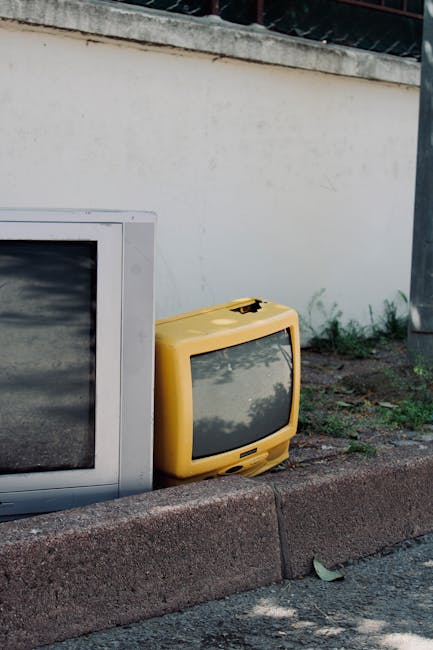
St John's Wood High Street: Where to Dispose Small Appliances
If you have a kettle that has died mid-breakfast, a toaster that now only smells like burnt toast, or a hand blender that rattles more than it blends, you are probably asking the same thing: where do you actually dispose of small appliances on or near St John's Wood High Street? It sounds simple, but once you start looking, the options can feel oddly confusing. Can it go in the bin? Should it be recycled? Do you need a collection service? Truth be told, the right answer depends on the item, its condition, and how quickly you want it gone.
This guide walks you through the practical choices for small appliance disposal in St John's Wood, from the simplest drop-off approach to more convenient collection services. You will also find a step-by-step process, common mistakes to avoid, a useful comparison table, and a realistic checklist you can follow without overthinking it. Let's keep it clear, local, and useful.
Table of Contents
- Why St John's Wood High Street: Where to Dispose Small Appliances Matters
- How St John's Wood High Street: Where to Dispose Small Appliances Works
- Key Benefits and Practical Advantages
- Who This Is For and When It Makes Sense
- Step-by-Step Guidance
- Expert Tips for Better Results
- Common Mistakes to Avoid
- Tools, Resources and Recommendations
- Law, Compliance, Standards, or Best Practice
- Options, Methods, or Comparison Table
- Case Study or Real-World Example
- Practical Checklist
- Conclusion
- Frequently Asked Questions
Why St John's Wood High Street: Where to Dispose Small Appliances Matters
Small appliances seem harmless because they are, well, small. But a broken toaster, hair dryer, coffee machine, or mini heater is still electrical waste. That means it should not be treated like ordinary household rubbish unless it clearly belongs in general waste according to local guidance and the item is free from electrical components. Most small appliances contain wiring, metal, plastics, and sometimes batteries. Some also have bits that can leak, overheat, or break down in a rubbish bag at the worst possible moment. Nobody wants that smell in a kitchen bin on a warm afternoon.
On a busy high street like St John's Wood, the practical challenge is not just disposal itself. It is convenience, timing, and making sure you do the right thing without dragging a dead appliance around for a week. For residents in flats, especially, storage can become the real issue. One broken kettle turns into three broken gadgets sitting by the door. Then suddenly you are living with a tiny appliance graveyard.
Disposing of small appliances properly also supports reuse and recycling where possible. In many cases, the most sensible route is to separate what can be repaired, donated, or recycled from what truly needs disposal. That kind of sorting saves time later and usually makes the process less stressful overall.
How St John's Wood High Street: Where to Dispose Small Appliances Works
At a practical level, the disposal process usually falls into one of a few routes: reuse, recycling, collection, or general waste. The right route depends on whether the appliance still works, whether it contains batteries, and whether you want a hands-off solution or a DIY drop-off.
If the appliance still works, it may be suitable for donation or resale. If it is broken but still structurally sound, it may be accepted for recycling or taken away through a clearance service. If it contains a battery, you should treat that part carefully, because batteries often need separate handling. And if the item is beyond saving, a proper waste removal route is the safest bet.
In St John's Wood, people usually choose one of three approaches:
- Local drop-off or recycling route: Best if you can transport the item yourself and want a more direct option.
- Collection service: Useful if you have several items, heavy items, or no time to make a trip.
- Combined clearance service: Handy if the appliance is just one part of a wider clear-out, such as a kitchen refresh or flat clearance.
If you are already dealing with other clutter, it can make sense to bundle the appliance into a wider removal job. That is where services like home clearance or flat clearance become more practical than trying to solve one small item in isolation.
Key Benefits and Practical Advantages
Good disposal is not just about getting rid of clutter. It also creates a cleaner, safer, and more organised home. Small appliances tend to hide in cupboards and drawers until the day you finally need the space. Then you realise how much mental relief comes from simply clearing them out.
Here are the main advantages of choosing the right disposal method:
- Less clutter: Small appliances build up quickly, especially in compact London homes.
- Better safety: Old electrical items can have exposed plugs, damaged cords, or heat-related wear.
- Improved recycling potential: Appliances often contain materials that are recoverable.
- Less hassle: The right service saves you from multiple trips and awkward carrying.
- Cleaner move-out or reset: Helpful during renovations, tenancy changes, or seasonal decluttering.
There is also a quiet practical benefit: once you clear the broken bits, you get a better sense of what you actually use. We have all got that one gadget tucked away since 2019, haven't we? Disposal can be a tiny reset. Nothing dramatic. Just useful.
Who This Is For and When It Makes Sense
This topic matters to a wide range of people, not just homeowners with a spare afternoon. If any of the situations below sound familiar, you are in the right place.
- Homeowners replacing old kitchen gadgets or clearing out a utility area.
- Tenants preparing for a move and needing to leave the property tidy.
- Landlords dealing with left-behind appliances after a tenancy ends.
- Flat residents who need a practical solution for one or two items without filling the hallway.
- Small offices that need to remove kettles, microwaves, fans, or office kitchen items.
- Busy professionals who would rather arrange collection than haul items around the neighbourhood.
It also makes sense if the appliance is awkward to carry, damaged, or mixed in with other unwanted items. For example, if you are replacing a toaster, a blender, and a broken desk fan at the same time, a broader waste removal service is usually more efficient than tackling each object separately.
And if the item came from a work setting, you may want to explore business waste removal or office clearance so the disposal route fits the type of premises.
Step-by-Step Guidance
Here is a simple way to handle small appliance disposal without making a meal of it.
1. Identify the appliance and check whether it still works
Start with the obvious question: is it broken, partly working, or still usable? If it still works, think reuse first. That can mean donation, gifting, or selling. If it is beyond repair, move on to disposal.
2. Look for batteries, cords, or detachable parts
Some small appliances contain batteries or removable components that need careful handling. A cordless vacuum head, for example, is not the same as a simple plug-in toaster. If a battery is built in, do not rip into the unit just to get it out unless you know what you are doing.
3. Wipe the item down
This sounds basic, but a quick clean makes a real difference. No one wants to pass on a sticky blender or a crumb-filled sandwich toaster. A minute with a cloth can make reuse more likely and disposal less unpleasant.
4. Decide whether the item should be reused, recycled, or removed
Ask yourself: is the item good enough for someone else, or is it simply at the end of the road? If it is still functional, consider reuse. If not, recycling or a removal service is the safer route.
5. Choose the most convenient disposal method
If you only have one item and easy transport, a drop-off route may be enough. If you have multiple items, limited access, or a busy schedule, a collection-based solution is often better. In apartments with narrow stairwells or no lift, convenience matters more than people expect.
6. Prepare for collection or transport
Unplug the item, secure loose cords, and keep any accessories together. A small box of parts, leads, or manuals can save time later. It also reduces the chance of someone thinking the appliance is still in use.
7. Remove it promptly
Once you have chosen a route, do not leave the item by the door for days. That is how clutter quietly multiplies. Best to deal with it while the decision is fresh.
Expert Tips for Better Results
In our experience, the people who handle appliance disposal smoothly tend to do a few small things well. None of them are complicated, but they save hassle.
- Group similar items together. If you are getting rid of a toaster, blender, and kettle, prepare them as a single batch.
- Check for repair value. A broken appliance with a minor fault may be fixable, especially if the issue is only a plug, fuse, or cable.
- Keep accessories separate. Leads, attachments, charging docks, and manuals are easy to lose, so bag them together.
- Avoid mixing wet waste with electrical waste. It sounds obvious, but kitchens get messy and things are rarely as neat as they should be.
- Use clearance when timing is tight. If you are moving, refurbishing, or reorganising, one larger collection is usually easier than multiple trips.
A useful rule of thumb: if it would annoy you to carry it through a crowded high street on a rainy day, it probably deserves a proper collection plan. London weather has a way of making practical decisions for us.
If you are also clearing larger household items at the same time, it can be worth looking at furniture disposal or furniture clearance so you can deal with everything in one organised sweep.
Common Mistakes to Avoid
Small appliance disposal often goes wrong in predictable ways. The good news is that they are easy to avoid once you know what to look out for.
- Putting electrical items in the wrong bin. Not all waste streams are suitable for appliances, even small ones.
- Forgetting about batteries. Batteries can change the handling requirements, especially in cordless devices.
- Leaving items outside too early. This can create a mess, attract weather damage, or look untidy in shared buildings.
- Assuming "small" means "non-problematic." A tiny appliance can still contain complex parts and should be treated properly.
- Ignoring cables and chargers. These are easy to overlook, but they matter for safe disposal and recycling.
Another one that comes up a lot: people keep broken appliances "just in case" and then never revisit the decision. Let's face it, that drawer is not a storage solution. It is a pause button.
Tools, Resources and Recommendations
You do not need a toolkit the size of a garage to deal with small appliances. A few simple tools and habits will do most of the work.
| Item or Resource | Why It Helps | Best For |
|---|---|---|
| Strong bag or box | Keeps cords, plugs, and accessories together | Small items with loose parts |
| Cleaning cloth | Makes reuse or handling more pleasant | Kitchen appliances and handheld devices |
| Marker or label | Helps identify items for donation or removal | Batch clear-outs |
| Photo of item condition | Useful if arranging clearance or checking whether an item is reusable | Multi-item disposal planning |
| Collection service | Saves time and transport effort | Busy households and flats |
For a bigger clear-out, a broader service can be more efficient than organising each item separately. Many people start with a single appliance and end up sorting the whole cupboard, then the shed, then the loft. It happens. If that is you, it may be worth considering loft clearance, garage clearance, or house clearance depending on where the clutter has gathered.
Law, Compliance, Standards, or Best Practice
For electrical items in the UK, the safest general approach is to treat them as waste electrical and electronic equipment, often shortened to WEEE, unless a specific local route says otherwise. You do not need to memorise the acronym to make a good decision, but the principle is simple: electrical goods should be handled separately where possible and not casually mixed with general rubbish.
Best practice usually means the following:
- Keep appliances intact where possible rather than breaking them apart at home.
- Separate batteries if they can be removed safely.
- Use a reputable collection or clearance option for bulk items.
- Follow local handling guidance for items that could be hazardous or contain damaged wiring.
- Store items safely until removal, especially if cords are frayed or plugs are exposed.
If you are disposing of appliances from a business, the standard should be a little higher still. Commercial sites often need clearer record-keeping, safer storage, and a more consistent waste process. That is why business owners often choose a more structured service such as business waste removal rather than leaving it to chance.
There is also a practical safety angle. Damaged cords, cracked casings, or old appliances stored in damp areas can become more troublesome over time. This is especially relevant in basements, balconies, and utility cupboards where London weather and older building layouts do not always play nicely together.
Options, Methods, or Comparison Table
If you are deciding how to dispose of a small appliance, the simplest way is to compare the likely methods side by side. The best choice depends on speed, convenience, and whether you have one item or several.
| Method | Best For | Pros | Cons |
|---|---|---|---|
| Reuse or donation | Working appliances | Extends item life, avoids waste | Not suitable for broken items |
| Drop-off/recycling route | Single items you can carry | Direct and relatively simple | Requires transport and time |
| Collection service | Busy households, flats, multiple items | Convenient, low effort | Usually less immediate than doing it yourself |
| Full clearance service | Mixed clutter, move-outs, larger projects | Handles multiple categories at once | May be more than you need for one item |
For many people around St John's Wood High Street, the answer is not one method forever. It changes depending on the day. A single toaster might be a quick drop-off. Six mixed appliances after a kitchen refresh? That is a collection job, no question.
Case Study or Real-World Example
Here is a typical local scenario. A resident in a flat off St John's Wood High Street has a broken kettle, a compact air fryer that no longer heats properly, and an old desk fan left over from last summer. Individually, none of the items feels urgent. Together, they start to crowd a kitchen cupboard and a corner of the hallway.
At first, the resident considers taking everything out on their own. Then the practical reality kicks in: the building has a narrow stairwell, the items are awkward to carry, and the weather is grey and drizzly, which somehow makes everything feel more annoying. So they group the items together, check that the cords are secure, and arrange a removal solution instead of waiting for a free Saturday that may never arrive.
The useful lesson here is simple. Disposal is easier when you stop treating each object as a separate project. Once the items are bundled and the plan is clear, the whole task becomes less mentally heavy. Small win. Big relief.
Practical Checklist
Use this quick checklist before you dispose of a small appliance:
- Is the appliance working, repairable, or definitely broken?
- Does it contain a battery, charger, or detachable power lead?
- Have you wiped it down and removed loose crumbs, water, or residue?
- Have you kept accessories together in one bag or box?
- Do you need a reuse option, recycling route, or collection service?
- Are you disposing of other items at the same time?
- Is the item safe to move and store until collection?
- Have you chosen the quickest sensible method rather than putting it off?
Expert summary: if the appliance is small but awkward, broken, or part of a larger clear-out, the most efficient answer is often not the nearest bin. It is the route that saves you time, avoids handling mistakes, and gets the item out of your way properly.
Conclusion
St John's Wood High Street: Where to Dispose Small Appliances is really a question about convenience, safety, and doing the sensible thing with minimal fuss. The best route depends on whether the item still works, whether it can be reused, and how much time and transport you want to spend on it. Some appliances are easy to pass on. Others are better collected and removed as part of a broader waste plan.
The main thing is not to leave the decision hanging around. Small appliances have a funny habit of becoming part of the furniture, and before you know it, that one broken gadget is joined by two more. Deal with them in one go, and the whole place feels lighter. Quietly better. That's usually the goal, really.
If you are ready to clear a few items or sort out a larger space, start with the most practical route and work from there. A tidy corner has a way of creating momentum, and sometimes that is all you need.
Get a free quote today and see how much you can save.
Frequently Asked Questions
Can I put small appliances in normal household rubbish?
Not usually, if they are electrical items. Small appliances often need separate handling because they contain wiring, metal, plastics, and sometimes batteries. Check the item type first and use a proper disposal route when in doubt.
What counts as a small appliance?
Examples include kettles, toasters, blenders, coffee makers, hair dryers, desk fans, irons, and similar plug-in or battery-powered household items. The size is less important than the fact that it is an electrical product.
Should I remove the battery before disposal?
Only if it is safe and easy to do so. Some batteries are removable, while others are built in. If the battery is sealed inside, it is usually better to keep the appliance intact and let the disposal route handle it properly.
Can broken appliances still be recycled?
Often yes, depending on the item and the disposal service. Even if the appliance no longer works, its materials may still be recoverable. The key is to use a route that accepts electrical waste.
What if my appliance still works but I no longer want it?
If it is in good working condition, reuse is worth considering first. Donation, gifting, or resale may be the most sensible option. It keeps the item in use and avoids unnecessary waste.
Is a collection service better than taking it myself?
It depends on convenience. If you only have one lightweight item and easy transport, taking it yourself may be fine. If you have several items, stairs, or limited time, collection is usually far less hassle.
How do I prepare a small appliance for collection?
Unplug it, coil the cord neatly, remove loose accessories, and place everything together. A quick wipe down is helpful too. It makes the item easier to handle and less messy for everyone involved.
What should I do with appliances from an office or small business?
Office and business items are often best handled through a commercial waste route, especially if you have multiple appliances or other equipment to remove. That keeps the process tidy and more organised.
Can I dispose of a kettle or toaster with other household clear-out items?
Yes, and that is often the easiest approach. If you are already clearing furniture, cupboards, or loft items, bundling small appliances into the same removal plan can save a lot of effort.
What is the safest way to store a broken appliance before disposal?
Keep it dry, unplugged, and away from heat sources. If possible, store it with its cable secured and any loose parts bagged together. That reduces the chance of damage or accidental contact.
Do I need to clean appliances before getting rid of them?
A light clean is a good idea. You do not need to deep-clean everything, but removing crumbs, residue, or loose dirt makes handling easier and can improve the chance of reuse or donation.
What if I have several different small appliances at once?
That is often when a collection or clearance service becomes the best option. Grouping items together makes disposal simpler and avoids multiple trips. Honestly, that is usually the point where people feel the biggest relief.